If you picture equestrian living in Rolling Hills as a simple version of country life with a barn out back, it helps to pause and look closer. This is a private, highly managed community where horses are part of the landscape, but ownership comes with real planning, property rules, and daily responsibility. If you are considering a move here, understanding how the community actually functions can help you make a smarter decision. Let’s dive in.
Rolling Hills Is a Private Equestrian Community
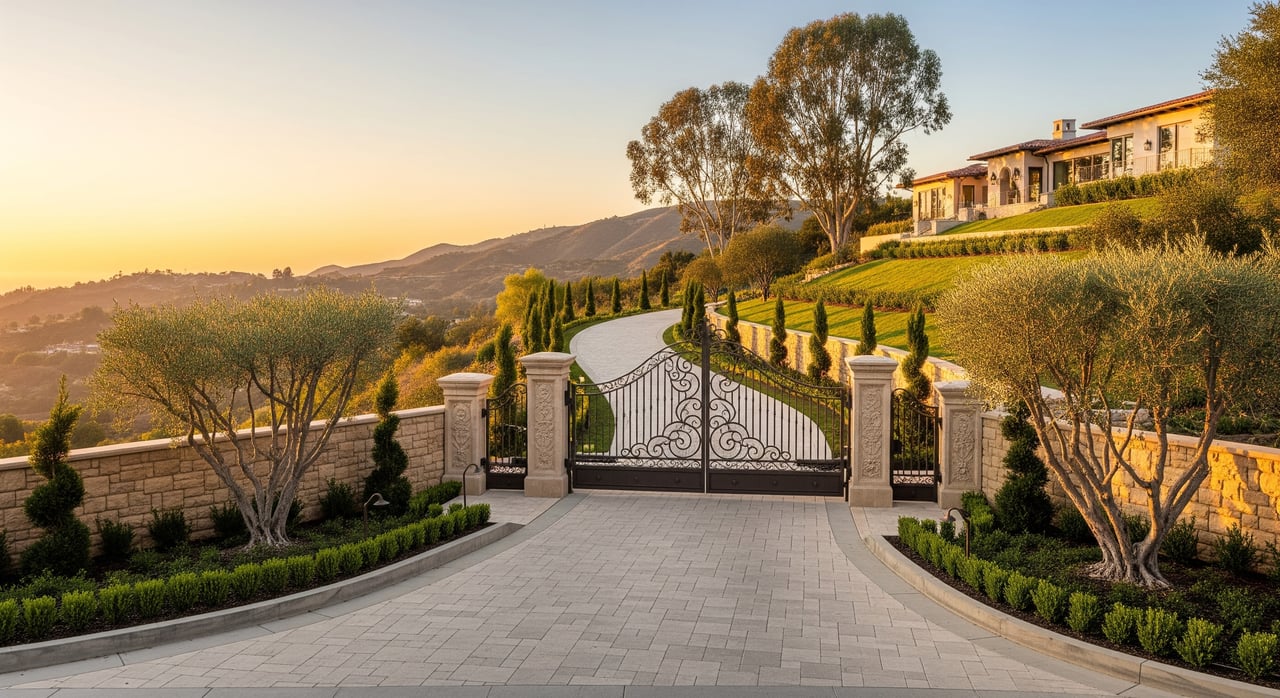
Rolling Hills is not a typical suburban neighborhood with a few horse properties mixed in. It is a private, gated equestrian community with three staffed entrances operating around the clock, and the roads inside the city run on Association easements rather than public streets.
That distinction shapes daily life. The City of Rolling Hills and the Rolling Hills Community Association are separate governing bodies, so property ownership is influenced by both municipal code and Association rules. In practical terms, that means the experience of living here is more structured than many buyers first expect.
The Association handles road and common-area maintenance, gate operations, architectural standards, and support for community clubs. For equestrian owners, that creates a setting where the horse lifestyle is preserved on purpose, not left to chance.
Horse Properties Are Defined by the Land
One of the biggest misconceptions about Rolling Hills is that every lot is automatically ready for horses. While the community is known for estate properties and equestrian use, the physical layout of each parcel matters just as much as the home itself.
All homes are single-family residences on minimum one-acre lots, and the zoning framework is designed to preserve equestrian uses and a rural hillside character. Depending on the zoning area, minimum lot size starts at 43,560 square feet and can increase to 87,120 square feet.
The code also limits how much of a lot can be covered or disturbed. Structure coverage is capped at 20%, impervious coverage at 35%, and disturbed area at 40%. Those limits affect where a home, barn, driveway, corral, and turnout space can realistically fit.
Why topography matters
In Rolling Hills, usable horse space is not just about square footage on paper. Grading, slope, access, and easement geometry all play a major role in whether a property functions well for horses.
Current subdivision and site-layout rules require a 12,000-square-foot graded building pad with an average slope of 10% or less. They also require at least 450 square feet of stable area and 550 square feet of corral area, with specific access-grade limits to those spaces.
That means two lots with similar acreage can feel very different in practice. A property may look large, but if access is awkward or the usable flat area is limited, the equestrian setup can be more constrained than buyers expect.
Easements shape property use
Perimeter easements are another important part of the picture. In Rolling Hills, those easements vary in width and must remain clear of buildings, fencing, plantings, and other obstructions.
For you as a buyer, that can influence where you place improvements and how easily horses, trailers, or service vehicles can move around the site. It is one more reason why horse-property evaluation here goes beyond the house and into the full layout of the land.
Barns and Corrals Need Practical Planning
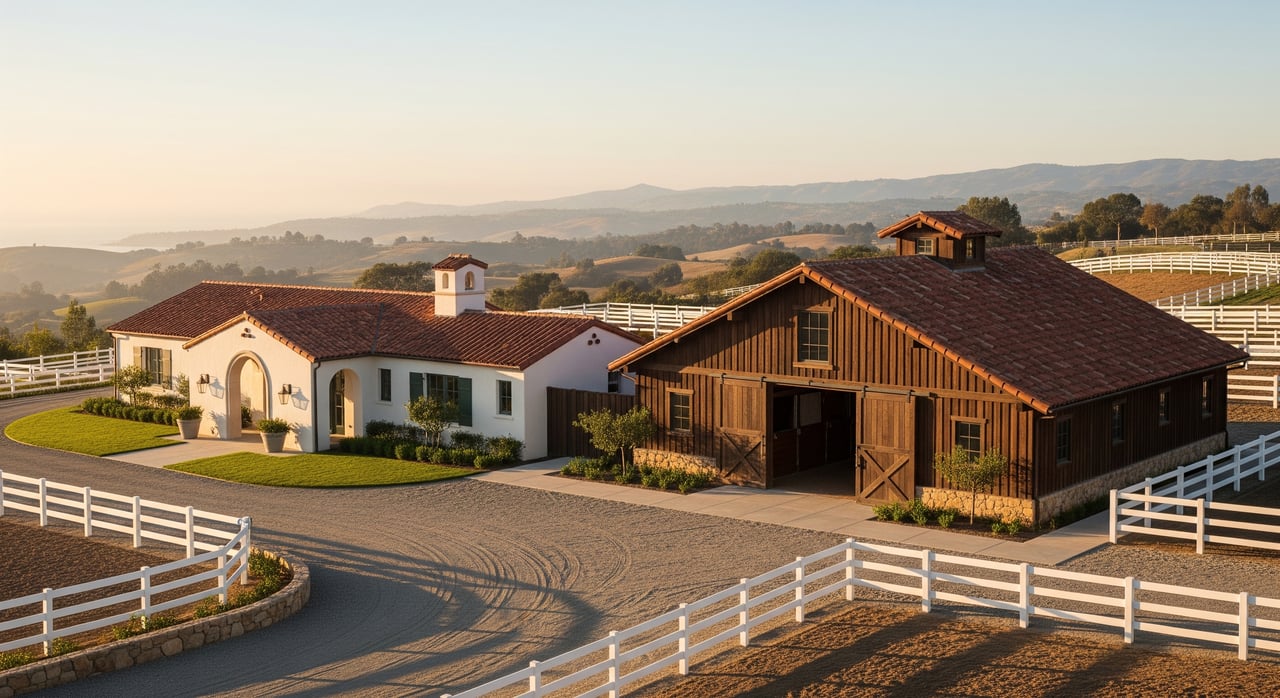
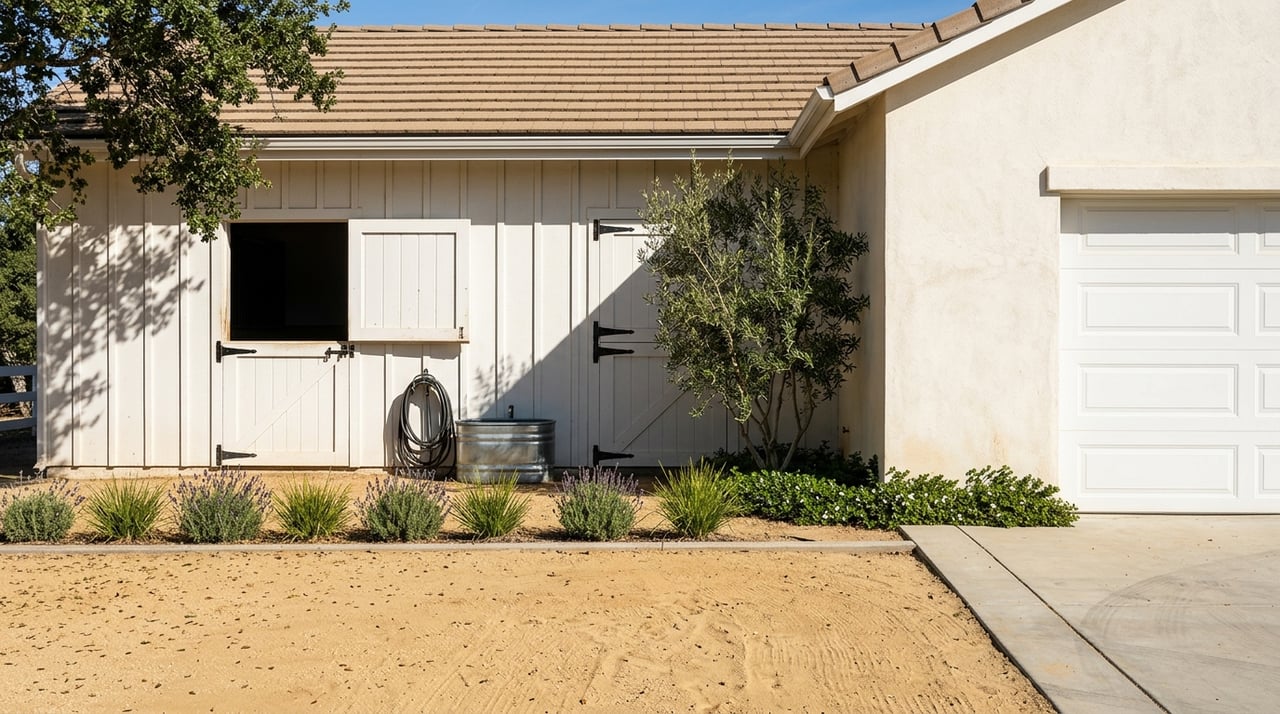
Equestrian living here tends to be private and estate-style rather than commercial. The planning guidance used by the city emphasizes that stables should fit the lot, function well for horses, and avoid overpowering the site.
That guidance includes a 60/40 planning concept, meaning the stable footprint should not exceed 40% of the equestrian space. It also recommends stall sizes that support comfortable horsekeeping, with 12-by-12 feet as the minimum stall size and 15-by-15 feet as an ideal target.
Outdoor space matters too. The planning guidance calls for at least 400 square feet of outdoor space per stall, along with nearby or contiguous exercise space.
Day-to-day function matters
A good equestrian setup is not only about appearance. It also needs practical access for feed delivery, manure removal, veterinary visits, and general maintenance.
The same planning guidance encourages layouts that allow service vehicles to reach the stable area without pushing vehicle traffic onto trails. It also discourages commercial uses and stall rentals, reinforcing the idea that Rolling Hills is geared toward private horse ownership rather than a boarding model.
For many buyers, this is one of the clearest realities of life here. A beautiful barn is only part of the equation. The property also needs to work smoothly on an everyday basis.
The Trail System Is a Major Amenity
One of the most distinctive features of Rolling Hills is its large private bridle-trail network and its two riding rings. These are not casual extras. They are central to the identity of the community and to the way many residents enjoy the equestrian lifestyle.
The riding rings include the Caballeros Ring at Hesse’s Gap and the Clif Hix Ring. Hesse’s Gap also includes hitching posts and a picnic area, and the rings are reserved for residents and their guests.
The trails are private, not public
This is an important point for buyers to understand. The trail system is private, access-controlled, and governed by specific use rules.
Riders must stay on established trails, trails are for daylight use unless special permission is granted, and bicycles and motor vehicles are prohibited. Nonresident riders need trail badges, and horseback riders must check in at the gates.
Pedestrian use is also limited, with nonresident walking access not treated like a public park system. In daily life, the trails function as a private community amenity rather than an open recreational network.
Equestrian Living Includes Real Upkeep
Rolling Hills offers a rare kind of horse-property lifestyle, but it is not low maintenance. If you are drawn to the space, privacy, and riding culture, it is important to understand the ongoing work that comes with it.
Property owners are responsible for defensible space all the way to their property lines. The Association performs limited weed clearance in roadside easements and certain common areas, but owners still carry significant responsibility for vegetation management on their own land.
Los Angeles County Fire Department also conducts annual brush-clearance inspections. In a hillside equestrian setting, fire readiness is simply part of ownership.
Emergency planning is part of ownership
The normal rhythm of horsekeeping here also includes emergency preparation. The Association maintains an Equine Emergency Evacuation Form in its document library, which reflects how wildfire planning is treated as a routine part of owning horse property.
That does not mean life here feels burdensome. It means the community is built around active stewardship. Owners who thrive in Rolling Hills are usually the ones who appreciate that responsibility and plan for it.
Community Life Goes Beyond the Barn
While the property itself matters, equestrian living in Rolling Hills is also shaped by shared traditions and community routines. The horse culture here is longstanding, with resident involvement woven into the identity of the city.
Caballeros, the resident horse club, traces its roots back to 1951 and to the early development of the trail network. Today, the club hosts trail rides, an annual pancake breakfast, and monthly luncheons.
That kind of recurring activity gives the equestrian lifestyle more texture. For some residents, horses are a private passion. For others, they are also a way to connect with neighbors through long-established community events.
What Buyers Should Know Before Choosing Rolling Hills
If you are considering Rolling Hills for equestrian living, it helps to look beyond the romance of the setting and focus on fit. This community offers privacy, land, managed trail access, and a strong horse-oriented identity, but not every property will support your goals in the same way.
Before you move forward, it is worth evaluating a property through a practical lens:
- Is there usable, accessible space for a stable and corral?
- How do slope, grading, and easements affect the layout?
- Does the site support day-to-day horsekeeping and service access?
- Are you comfortable with ongoing brush clearance and emergency planning?
- Do you want a private, rules-based equestrian community rather than a more flexible rural setting?
For the right buyer, Rolling Hills can be a remarkable match. The lifestyle is beautiful, but it is also specific, structured, and land-driven.
If you are exploring equestrian property in Rolling Hills and want a clear, local perspective on how a specific parcel may function, the Mackenbach Group can help you evaluate the details with discretion, care, and Peninsula expertise.
FAQs
Is equestrian living in Rolling Hills the same as owning a horse property in a typical neighborhood?
- No. Rolling Hills is a private, gated equestrian community with Association oversight, private trails, and property rules that shape how horse ownership works.
Can every Rolling Hills property accommodate horses?
- No. Lot size, topography, access, grading, easements, and applicable approvals all affect whether a parcel works well for horses.
Are the Rolling Hills bridle trails open to the public?
- No. The trail network is private, controlled by rules, and subject to gate check-ins and badge requirements for nonresident riders.
What kind of maintenance comes with a horse property in Rolling Hills?
- Owners should expect ongoing vegetation management, defensible-space upkeep, brush-clearance responsibilities, and emergency planning as part of normal ownership.
Are barns and stables in Rolling Hills designed for commercial boarding use?
- Generally, no. The planning guidance supports private, estate-style horsekeeping and discourages commercial uses and stall rentals.