Torrance's busiest road is changing owners this fall. Caltrans is handing the city the final 4.8 miles of Hawthorne Boulevard it still controls, from Pacific Coast Highway north to Redondo Beach Boulevard. The new turn lanes and the planned rail line will take budget cycles and years. The sidewalks come first. The city put a Hawthorne sidewalk repair contract out to bid in late August, weeks before it owned a foot of the road.
That order tells you how the handover will unfold on the street. The quickest changes are the ones the city can make with crews and a contract, and the slowest are the ones that need new money or another agency's cooperation.
Why the Sidewalk Went Out to Bid Before the Road Changed Hands
Hawthorne Boulevard, also State Route 107, carries more than 65,000 vehicle trips a day. That is the highest traffic volume of any road in Torrance, and the boulevard runs through the city's main retail corridor. Daily Breeze reported in July that for years the city could not make repairs or improvements residents asked for, because parts of the highway belonged to the state.
The city's staff report for the July 14 council meeting stated its intent "to address existing sidewalk deficiencies along the corridor as soon as possible." If a repair project could be designed, bid and awarded before the transfer, staff planned to get an administrative encroachment permit from Caltrans and start work on what was still a state highway. If not, the work would start as soon as possible afterward.
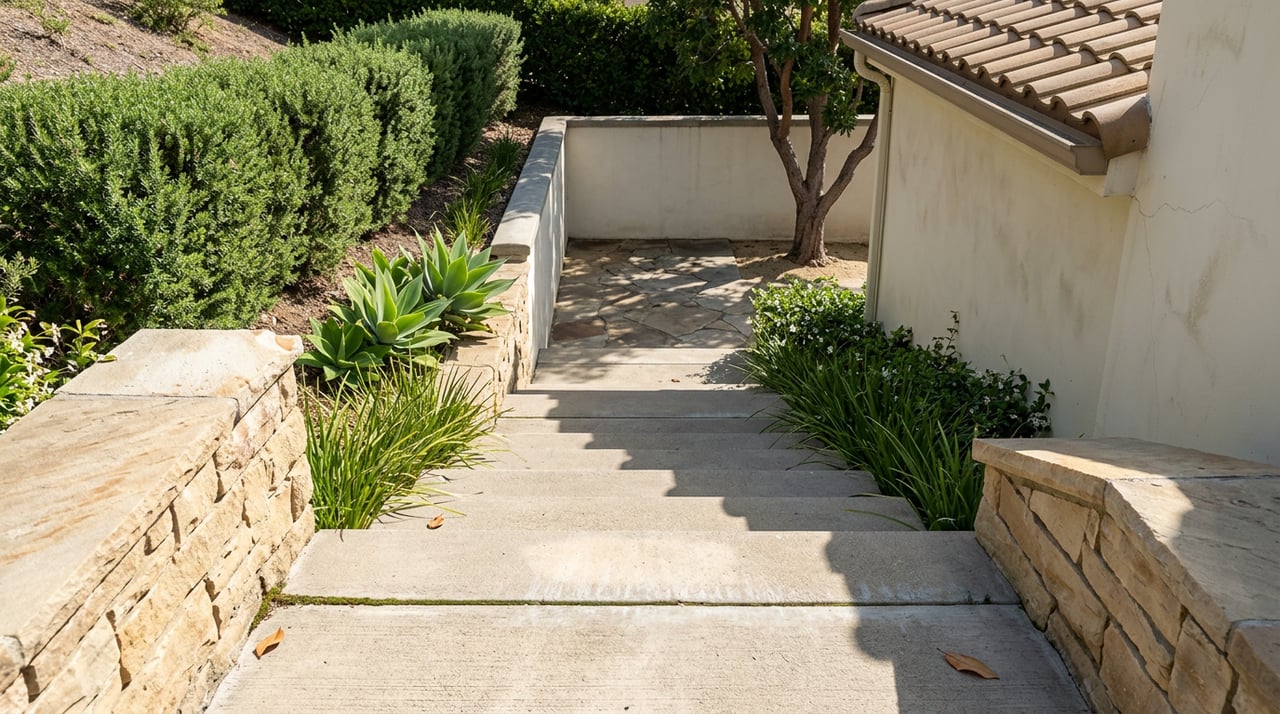
The city posted the bid on August 27 as the "Citywide Sidewalk Repair Program (Hawthorne Boulevard), I-152." Bids were due September 23. The scope covers sidewalk, driveway, curb, gutter and curb-ramp repairs along with tree-root work along Hawthorne between Redondo Beach Boulevard and Pacific Coast Highway. That is the full length of the transferred segment.
The city's bid portal lists the solicitation as closed but does not name a contractor. The project is not on the agenda for the October 6 City Council meeting.
Where the Paperwork Stands This Month
The transfer has passed every vote it needs. Only the final administrative steps remain. In order:
- July 14, 2026. The Torrance City Council approved the relinquishment agreement with Caltrans. The agreement is dated July 16.
- August 20–21, 2026. The California Transportation Commission approved Resolution R-4129 on its consent calendar, according to the draft minutes of that meeting. The Commission is scheduled to formally adopt those minutes at its October 15–16 meeting.
- About 60 days after the Commission acts. City staff estimated that recording the transfer with the county and receiving Caltrans' payment would take about 60 days. "The roadway is formally relinquished upon recordation and payment."
Counting 60 days from the August meeting puts the handover around late October. That is an estimate. Neither the city nor Caltrans has announced a recordation date. Legal responsibility moves at the moment of recording. Under the agreement, anything that happens on the road before that date stays with Caltrans, and anything after belongs to Torrance.
What $11.55 Million Was Priced to Fix
Torrance is taking the road in its current condition. Caltrans could not make timely improvements before the transfer, so it is paying the city a one-time sum of $11,550,000 to bring the corridor to what the staff report calls "a state of good repair."
City staff arrived at that figure by walking all 4.8 miles. They logged the condition of the pavement, curbs and gutters, sidewalks, driveways, curb ramps, signage, traffic signals and storm drains, and priced the repairs. The final number also covers engineering design, construction management and inspection.
That makes the payment a repair budget for the road as it stands. The city will also have to hire. Deputy Public Works Director Shin Furukawa wrote that maintaining and running the corridor would take "at minimum" four full-time positions across traffic signal, street and landscape maintenance, plus vehicles or contract services.
The council's reasons for taking the road focus on the corridor's daily operation. They include responding faster to routine and emergency problems with signals and other infrastructure, owning and synchronizing the traffic signals, speeding up private development review, and issuing permits locally.
The Intersections Next in Line
After the sidewalks, the next changes are lane changes at specific intersections. Not all of them are equally far along. Once Torrance owns the full corridor, it can start on almost two dozen improvements recommended over nearly a decade of waiting.
| Hawthorne Boulevard at | Planned change | Status as of July 2026 |
|---|---|---|
| Lomita Boulevard | New northbound right-turn lane | In design |
| 182nd Street | New northbound right-turn lane | In design |
| Sepulveda Boulevard, Carson Avenue, Torrance Boulevard, Del Amo Boulevard, 190th Street, Artesia Boulevard, Redondo Beach Boulevard | Additional right-turn, left-turn and through lanes | Recommended; subject to review and annual budget |
Furukawa said the city will move forward with as many of the improvements as funding and resources allow:
"Any recommended projects not already underway will be reviewed by Public Works staff and brought forward to the City Council for consideration through the normal annual budgeting process, as appropriate."
For a driver, this means the two northbound turn lanes at Lomita and 182nd are the next physical changes likely to appear after the sidewalk work. The longer list of lanes at the corridor's major cross streets will come up through budget discussions over the following years.
The Median Belongs to the Same Conversation
The same transfer also affects the largest project planned for Hawthorne Boulevard. In January 2026, the Los Angeles Metro Board of Directors unanimously approved an elevated route that extends the K Line 4.7 miles to the Torrance Transit Center. From the Redondo Beach (Marine) Station, the line follows Metro-owned right-of-way, then rises onto an elevated guideway along the 405 and runs down Hawthorne's center median. It rejoins the right-of-way south of 190th Street. Torrance had opposed that route.
Before the transfer, Metro would have gone to Caltrans for permits and easements on Hawthorne. Once the road is the city's, those requests go to Torrance. Public Engagement Manager Jin Chun said the scope of the city's review would depend on Metro's final design. He added that because the project is still in engineering and design, "it would be premature to speculate about how any future requests may be considered."
Metro spokesperson Patrick Chandler said the city taking ownership does not affect the extension's final environmental impact report or Metro's ability to complete the project. He said Metro will work with all three corridor cities, Torrance included, on ways to reduce effects on properties and disruption during construction. The Metro Board has also directed business outreach and technical assistance, a Business Interruption Fund, and its Eat, Shop and Play program for the corridor.
Businesses along the boulevard follow this closely. Daily Breeze reported that the Hawthorne corridor produces almost a third of Torrance's sales tax revenue, more than $20 million a year. The approved route would require permanent acquisitions at Volvo Cars South Bay and South Bay BMW/Mini, plus a temporary easement at South Bay BMW.
The timeline is long. Metro's project page lists the current phase as design and estimates completion in late 2036, pending funding. Over the next decade, the curb work and turn lanes will reshape daily trips on Hawthorne before any guideway goes up in the median.
Where Updates Will Surface
Three public records will show when each stage arrives. The first is the California Transportation Commission's October 15–16 meeting, where the August minutes are scheduled for adoption. The second is the county recording of the relinquishment, which is the date the road legally becomes Torrance's. The third is the award of the I-152 sidewalk contract, which would put the first city-hired crews on the corridor.
Hawthorne Boulevard runs past many of the Peninsula's front doors, and changes like these affect how an address feels well before they show up in a sales comparison. If you are weighing timing around a home near the corridor, Mackenbach Group can walk you through what the public record shows. Request a Private Consultation.
This article is general information, not legal, tax or financial advice. Consult a qualified professional about your situation.