Wondering whether adding an ADU in Lomita will actually raise your property’s value, or just add cost and complexity? You are not alone. For many homeowners, an ADU can create flexible living space, long-term rental income, and stronger resale appeal, but the numbers only work when the project fits your lot, your goals, and local rules. Here is what to know about ADUs in Lomita and how buyers, appraisers, and lenders tend to view them.
ADU rules in Lomita
If you own a single-family property in Lomita, the city’s public guidance says you may be able to add one ADU and one JADU on a lot with an existing or proposed single-family home. For multifamily properties, Lomita allows conversion ADUs in non-livable space and up to two detached ADUs. The city also updated residential and ADU standards through Ordinance No. 868 and its ADU guidance.
For practical planning, state law still matters because the California Department of Housing and Community Development notes that state rules control when local standards conflict. Lomita’s posted materials also state that ADUs cannot be used as short-term rentals for stays under 30 days, and an ADU must have a separate entrance from the primary dwelling. You can review those broader state standards in the California ADU Handbook.
Parking and approval timelines
Many homeowners assume parking rules and permit timing will slow an ADU project down. In reality, state guidance says local agencies may not require parking for ADUs located within one-half mile walking distance of public transit. The same handbook says completed ADU and JADU applications are generally supposed to be reviewed within 60 days.
There may also be a faster path for detached ADUs using preapproved plans. According to the state handbook, those applications can be approved or denied within 30 days. That can be meaningful if you are comparing a custom build with a more standardized approach.
Why transfer rules matter for value
In most cases, an ADU transfers with the main property rather than being sold separately. Lomita’s public ADU page explains that separate conveyance is limited to narrow statutory situations and usually requires a local ordinance. For resale, that matters because buyers and lenders typically evaluate the property as one parcel, not as a house plus a completely separate product.
What ADUs in Lomita tend to cost
ADUs are often more affordable than ground-up multifamily development because they do not require buying additional land or building major shared infrastructure. Even so, a realistic budget still needs to include design, permits, site preparation, utility work, and construction. The California ADU Handbook makes that clear.
One of the most widely cited California benchmarks comes from the UC Berkeley Terner Center and Center for Community Innovation research. In that survey, the median statewide ADU construction cost was $150,000, or $250 per square foot, while the Los Angeles County median was $100,000, or $197 per square foot.
Those figures are helpful starting points, but they are not a guarantee for any specific Lomita property. Costs can rise if your lot needs grading, utility upgrades, or a more customized detached build. That is why it is important to evaluate the project as a property-specific improvement rather than relying on a simple statewide average.
The 750-square-foot fee threshold
One local detail can make a meaningful difference in your budget. Lomita’s published ADU development chart says units under 750 square feet are exempt from impact fees, while larger units are charged impact fees.
That threshold can make smaller ADUs easier to justify financially. If your goal is a flexible guest space, housing for extended family, or a compact long-term rental, staying below 750 square feet may help preserve more of your return.
What smaller ADUs may rent for
There is no ADU-only rental dataset in the materials provided for Lomita, but local apartment data can still offer useful context. Current rental trackers place one-bedroom rents in Lomita at roughly $1,975 to $2,114 per month, based on local rent trend data.
That is not a direct prediction for every ADU. Still, it gives you a rough market proxy because many smaller ADUs compete with studios and one-bedroom rentals rather than larger apartments. If your planned unit is compact, private, and well designed, that is often the segment you are testing against.
A simple payback example
Using the statewide median construction cost of $150,000 and local one-bedroom rent ranges, the research suggests a rough gross payback period of about 5.9 to 6.6 years. That math does not include financing, vacancy, property taxes, insurance, or maintenance. It is only a basic screening tool.
In other words, the rent story can look attractive at first glance, but it should not be the only reason you build. The best ADU decisions usually combine financial logic with a real household need.
How ADUs affect property value
The strongest evidence that ADUs can support value comes from California appraisal trends. According to the Federal Housing Finance Agency’s California ADU analysis, median appraised values between 2013 and 2023 grew faster for Enterprise-backed single-family properties with ADUs than for those without them.
In 2023, the median appraised value was $1.064 million for California properties with ADUs, compared with $715,000 for properties without ADUs. That does not prove every ADU adds a fixed premium, but it does show that the market has consistently recognized value in homes with accessory units.
What appraisers look for
Fannie Mae says an ADU is treated like any other home feature or improvement, and any value adjustment should reflect actual market reaction. You can see that in its appraisal guidance for accessory unit adjustments.
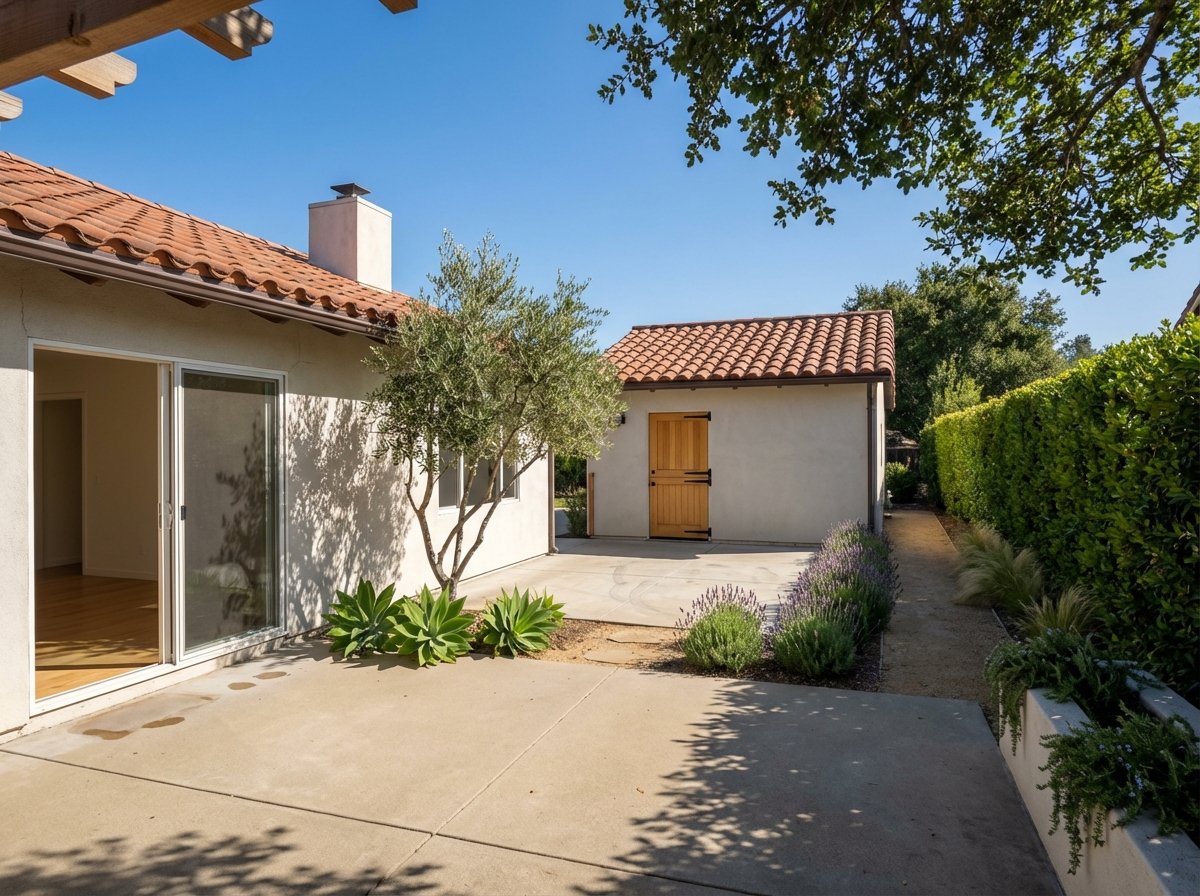
That means an ADU usually adds the most value when it is legal, functional, and clearly contributes to how buyers would use the property. A detached unit with privacy, a separate entrance, and good documentation often has a stronger value story than an informal conversion with unclear permits or limited utility.
What lenders consider
Lender treatment matters because resale value is tied to financing. Freddie Mac states that ADUs may increase long-term property and resale value, and in some cases ADU rental income can be used for borrower qualification.
Freddie Mac also indicates that the unit must be legally permissible. That is one reason documentation matters so much. If you want the broadest buyer pool later, permit history, legal compliance, and clear property records can be just as important as the unit itself.
When an ADU makes sense in Lomita
An ADU often makes the most sense when it solves a real living need first. The state and Freddie Mac both point to common benefits such as housing for family members, space for guests, long-term rental income, and support for aging in place. Freddie Mac’s consumer research on ADUs reflects those same motivations.
For many Lomita owners, the cleanest case is a smaller, efficient unit that stays under the city’s impact-fee threshold and does not require major site complications. That approach can help align build cost with realistic rent levels and buyer appeal.
Situations where value may be limited
Not every ADU project is a clear win. If your lot requires major grading, expensive utility upgrades, unusual setbacks, or a highly custom detached build, your total cost can quickly outpace what the market will support in rent or resale value.
That does not mean the project is a bad idea. It simply means the return may come more from personal use and flexibility than from a strong financial spread. If you are building purely for speculative gain, the margin may be thinner than expected.
How buyers tend to see ADUs
From a buyer’s perspective, the most appealing ADUs are usually the ones that feel easy to understand and easy to use. Buyers tend to respond well to units that offer privacy, clear function, and legal status. That can mean space for extended family, a live-in support arrangement, guests, or supplemental long-term income.
The key is that the ADU should feel like a true asset to the property, not an unresolved project. In a resale setting, clarity often supports confidence, and confidence can support value.
A practical bottom line for Lomita homeowners
In Lomita, an ADU can absolutely support property value, but not every ADU adds value in the same way. The best outcomes usually come from projects that are legally compliant, appropriately sized, and aligned with how the property will actually be used. A well-planned ADU can improve flexibility today and strengthen marketability later.
If you are weighing whether to build, buy, or sell a property with an ADU in Lomita, it helps to look at the decision through both a lifestyle and resale lens. The right strategy depends on your lot, your budget, and how the market is likely to respond. For thoughtful guidance on positioning, pricing, and long-term value, you can connect with the Mackenbach Group.
FAQs
What ADU rules apply to single-family homes in Lomita?
- Lomita’s public guidance says a single-family lot with an existing or proposed home may allow one ADU and one JADU, subject to city and state rules.
What rental income could a smaller Lomita ADU potentially generate?
- Local one-bedroom rent trackers suggest roughly $1,975 to $2,114 per month as a useful market proxy, though that is not ADU-specific data.
What size ADU avoids impact fees in Lomita?
- Lomita’s published ADU chart says units under 750 square feet are exempt from impact fees, while larger units are charged impact fees.
What do appraisers and lenders consider when valuing a property with an ADU?
- They generally look for legal compliance, functionality, and evidence that the market recognizes the ADU as a meaningful property feature.
What type of ADU project tends to make the most sense in Lomita?
- In many cases, a smaller, efficient ADU that meets a real household need and avoids unnecessary site costs offers the strongest balance of usability and value.