If you are drawn to Manhattan Beach, one question shapes almost everything about your day-to-day experience: do you want to live closest to the sand, under a more established residential canopy, or higher up with more room to spread out? In a compact city with just 2.1 miles of beachfront and a dramatic rise from sea level to about 235 feet, small changes in location can create a very different lifestyle. This guide will help you compare the Sand Section, Tree Section, and Hill Section so you can focus your search with more confidence. Let’s dive in.
Why Manhattan Beach Feels So Different
Manhattan Beach covers about 4 square miles, but it does not live like a one-note beach town. City planning documents treat the Sand Section, Tree Section, and Hill Section as distinct neighborhood areas, and the city’s topography is a big reason why.
At the beach, elevation starts at 0 feet. Farther inland and uphill, the land rises to roughly 235 feet near Sepulveda Boulevard and Longfellow Drive. That shift affects how each section feels in terms of access, space, privacy, parking, and even the pace of a normal day.
Sand Section: Beach-First Living
If your ideal routine includes walking to the beach, the pier, downtown shops, and the Strand, the Sand Section is usually the strongest fit. City visitor materials highlight walking, running, biking, skating, people-watching, walk streets, and beach-adjacent recreation, all of which shape the area’s appeal.
This is the most pedestrian-oriented of the three sections. You are choosing convenience to the coastline and downtown activity, often with less need to drive for everyday leisure.
What to Expect in the Sand Section
The trade-off is space. City housing documents describe the Beach Area, which is the formal planning language commonly associated with this coastal zone, as having lots that are generally under 3,000 square feet.
That smaller-lot pattern tends to mean less yard space and tighter parking conditions. The city specifically notes that parking is in short supply in the Beach Area, and public parking infrastructure helps meet demand in the Sand, Dune, and Tree sections.
Who the Sand Section Often Fits Best
The Sand Section can make sense if you value walkability over lot size. It may also appeal if you want the energy of a beach-centered setting and easy access to the pier, downtown, and outdoor activity.
If you know that parking ease, extra outdoor space, or a quieter residential rhythm matter more to you, you may want to compare it carefully against Tree or Hill before moving forward.
Tree Section: The Middle Ground
The Tree Section often feels like the best balance between location and space. The city describes it as the portion of Manhattan Beach east of Grand or Grandview Avenue and northwest of Valley Drive, with a small commercial edge near Sepulveda Boulevard, while remaining almost exclusively single-family.
That matters if you want a setting that feels residential and established, but still central within the city. For many buyers, this is where the compromise starts to make a lot of sense.
What Sets the Tree Section Apart
In city housing documents, the Tree Section falls between the Beach Area and the Hill Section in lot capacity under mansionization standards. The listed maximum lot area is 10,800 square feet, compared with 7,000 in the Beach Area and 15,000 in the Hill Section.
You may not feel that difference just by reading numbers, but you often feel it in daily living. The Tree Section generally offers more breathing room than Sand while still keeping you relatively connected to the rest of Manhattan Beach.
Why the Tree Section Feels Residential
The city’s tree ordinance is intended to preserve healthy canopies, scenic beauty, and neighborhood character. Along with the area’s land-use pattern, that helps explain why the Tree Section is often seen as more established and more residential in feel than the beach strip.
That does not mean parking pressure disappears. The city still groups Sand, Dune, and Tree together in public-parking discussions, so it is smart to evaluate each property’s actual parking setup instead of assuming the issue goes away inland.
Hill Section: More Room and Elevation
If you are looking for the most single-family-focused setting of the three, the Hill Section stands out. City housing documents note that commercial and higher-density uses are limited to Sepulveda Boulevard and Manhattan Beach Boulevard, while the broader section remains oriented around single-family homes.
This is also where Manhattan Beach’s topography becomes especially meaningful. Because the city rises inland, the Hill Section has the clearest elevation advantage.
Why Buyers Consider the Hill Section
The Hill Section has the largest lot capacity of the three under the city’s mansionization standards, listed at 15,000 square feet. In practical terms, that supports the idea that buyers here may find more room, more privacy, and more on-site parking potential than in the Sand Section.
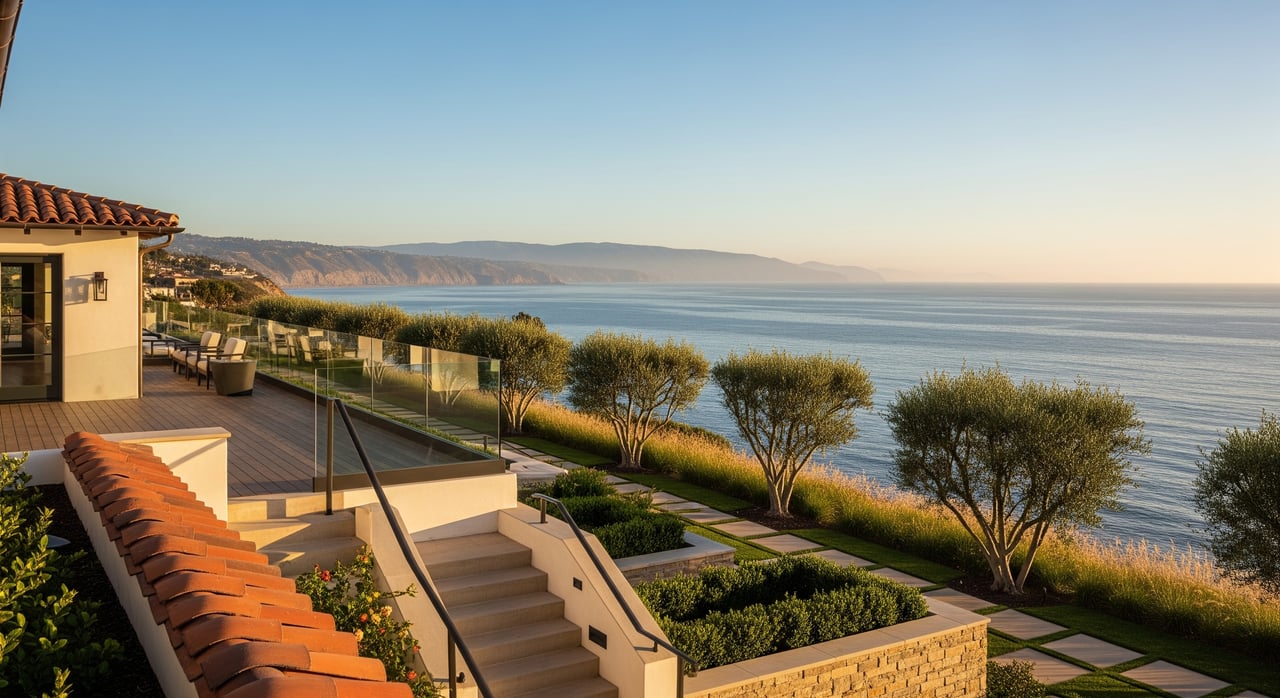
This section also has the strongest view potential based on elevation. Still, actual ocean or city views are always property-specific, so you should confirm what a particular parcel truly offers rather than rely on the section name alone.
The Main Trade-Off in the Hill Section
The biggest compromise is convenience to the beach. You are generally giving up immediate walk-to-sand access in exchange for more space and a different residential feel.
For some buyers, that is an easy trade. For others, especially if beach access is part of the reason they chose Manhattan Beach in the first place, it may feel like too much distance from the coast-centered lifestyle.
A Quick Side-by-Side Comparison
| Section | Best Known For | Main Trade-Off |
|---|---|---|
| Sand | Walkability to the beach, pier, Strand, and downtown | Smaller lots and more parking friction |
| Tree | Balanced mix of central location and single-family feel | Parking can still be a factor depending on the property |
| Hill | Larger lot potential, elevation, and more privacy | Less immediate beach convenience |
How to Choose the Right Manhattan Beach Area
The right section usually comes down to how you want your day to feel. If you picture morning walks on the Strand and easy access to the pier and downtown, Sand may be your match.
If you want a mostly single-family setting that feels central and established, Tree often offers the strongest middle-ground option. If your priorities lean toward space, privacy, and elevation, Hill may be the clearest fit.
Questions to Ask Yourself
Before you narrow your search, it helps to rank your real priorities. Consider questions like:
- How often do you want to walk to the beach or downtown?
- How important are yard space and lot size?
- Do you need more on-site parking?
- Would a quieter residential setting improve your daily routine?
- Are view potential and elevation part of your long-term goals?
When you answer those honestly, the right section usually becomes easier to spot.
Property Details Matter More Than the Section Name
Even after you choose between Sand, Tree, and Hill, each address still needs careful review. City guidance points buyers toward verifying the zoning map, parcel report, coastal-zone rules, parking setup, and tree requirements before making an offer.
That is especially important if you are thinking about remodeling or rebuilding. Manhattan Beach’s residential bulk, volume, and mansionization standards were designed to reduce front-facing mass, increase open space and setbacks, and retain smaller homes.
Do Not Overlook Parking and Access
Parking is not a small detail in Manhattan Beach. The city maintains 12 parking lots with more than 1,400 spaces, plus 87 bike-parking locations, and Beach Cities Transit Line 109 serves Manhattan Beach Pier and Downtown Manhattan Beach.
That public infrastructure helps, but your daily experience will still depend a lot on your exact address. A home’s garage, driveway setup, street conditions, and proximity to activity centers can all affect how convenient it feels in real life.
Final Thoughts on Sand, Tree, or Hill
There is no one-size-fits-all answer in Manhattan Beach. The Sand Section offers the strongest beach-and-downtown lifestyle, the Tree Section often gives you the best space-to-location compromise, and the Hill Section offers the most room and the strongest elevation advantage.
The key is matching the section to how you actually live, not just how a map looks. If you want experienced guidance as you compare Manhattan Beach options and evaluate the details that matter most, the Mackenbach Group is here to help with a thoughtful, high-service approach.
FAQs
What is the Sand Section in Manhattan Beach known for?
- The Sand Section is best known for walkability to the beach, the Strand, the pier, and downtown, along with smaller lots and tighter parking conditions.
What is the Tree Section in Manhattan Beach like?
- The Tree Section is a mostly single-family area that often appeals to buyers looking for a more established residential feel and a middle ground between beach access and space.
What makes the Hill Section different in Manhattan Beach?
- The Hill Section stands out for its larger lot potential, more single-family orientation, stronger elevation advantage, and possible view opportunities that depend on the specific parcel.
Which Manhattan Beach section has the largest lots?
- Based on the city’s housing-element table and mansionization standards, the Hill Section has the largest listed lot capacity, followed by the Tree Section, then the Beach Area.
What should buyers verify before buying in Manhattan Beach?
- Buyers should verify the address-specific zoning map, parcel report, coastal-zone rules, parking situation, and any tree requirements before making an offer.
Is parking a real issue in Manhattan Beach beach areas?
- Yes. City materials note parking demand in the Sand, Dune, and Tree sections, and the Beach Area is specifically described as having parking in short supply.